Putting an end to knife crime
South Wales Police & Violence Prevention Unit
Project Name#NotTheOne
Credits







The challenge
Knife crime devastates families and communities across the UK. In the year leading to March 2022, 282 lives were lost to knife violence – the highest number in over 70 years. Among them were 99 young people under the age of 25, including 13 children younger than 16.
Working with South Wales Police and the Violence Prevention Unit, we set out to create a campaign that could speak to young people aged 11 to 16 about the risks and consequences of carrying a knife.
But this issue goes beyond young people alone. It affects parents, carers, educators and wider communities, so the campaign needed to bring everyone into the conversation.
Lead by research and insight
With a subject this serious, every decision had to be grounded in evidence. We spoke with young people, youth workers, academics and more than 30 partners working with South Wales Police.
During our research, one message came through clearly: young people trust those who are closest to them – their friends, families, schools and community groups.
We built a campaign that looked and sounded different to anything a police force or government body would create. The tone was designed to feel peer-led, not institutional. It needed to feel like it came from their world, not ours.
We were also careful not to exaggerate the issue. Despite media narratives, knife carrying remains rare, and scare tactics can do more harm than good. Our job was to be honest, not alarmist – and to empower young people with real information and a sense of choice.
The name #NotTheOne reflects that balance. It is a message about ownership, about taking a different path and about refusing to let someone else decide your future for you.


Showcasing real experiences
At the heart of the campaign were four real stories, each represented in a short film. They explored the personal circumstances, relationships and decisions that led to a knife crime incident, and the lasting impact it had on those involved.
We worked closely with each participant, alongside South Wales Police, to ensure they felt safe, respected and fully in control of how their story was told. The interviews were handled with care, using a trauma-informed approach. This meant creating space, building trust and listening on their terms.
These stories brought authenticity and emotional weight to the campaign. They allowed young people to see the reality of knife crime not through statistics, but through lived experience.
Watch the seriesCarrying their voices into communities
To reach people where they live and learn, their words were also used across outdoor and digital advertising. From buses and train stations to social media, the campaign carried their voices into communities, amplifying their message in an honest and respectful way.


Co-created with young people
Young people were not just consulted – they helped shape and deliver the campaign.
We collaborated with creative writing students from Cardiff Met and a local youth acting group to produce ‘Last Seen: A Warning Tale’ – a short film told entirely through a phone screen. The story was developed in partnership with them, reflecting how they speak, text and make sense of the world around them.
The film uses a ‘screen life’ format, unfolding through messages, maps, calls and videos. It mirrors the way many young people experience daily life, giving the story immediacy and emotional impact.
This approach allowed us to explore difficult themes without relying on shock or fear. It felt close to home, not staged. And it spoke to its audience in a way that felt familiar, relevant and real.


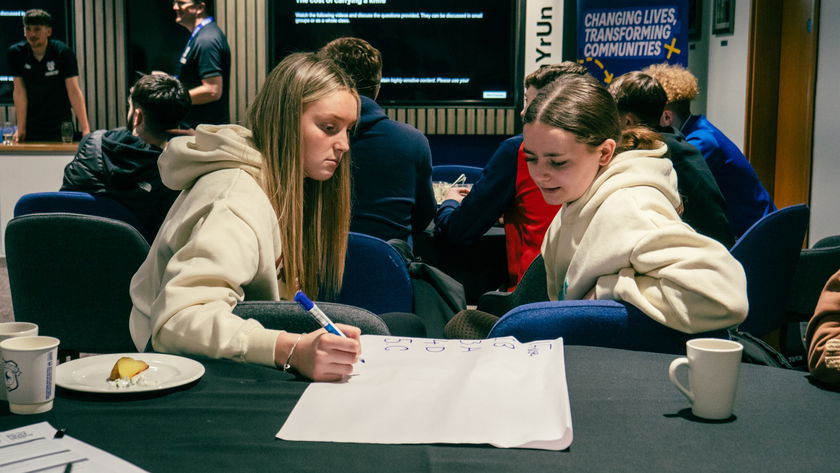

‘Last Seen: A Warning Tale’. Answer the call.

The microsite and education packs
The campaign microsite became the central hub for information and resources. It hosted the campaign films and allowed young people to engage with the content at their own pace.
It also gave teachers and educators access to lesson plans, discussion materials and classroom content. These tools were designed to help spark meaningful conversations, challenge misconceptions and give professionals the confidence to address knife crime in a practical and sensitive way.

Earning national recognition
Police forces across the UK approached the team to explore how they could implement the campaign in their own regions.
Its distinct approach, represented by real voices and informed by evidence, stood out as a meaningful alternative to traditional crime prevention messaging.
To support this wider adoption, we developed a comprehensive set of campaign guidelines. These helped ensure consistency in tone, message and visual identity, while allowing space for regional adaptation. The aim was to protect what made the campaign effective, while enabling others to deliver it in ways that felt relevant to their own communities.


Impact
- 12% drop in knife crime across South Wales – reversing the national trend
- 15,000 young people reached with education materials
- 1,000 education pack downloads across South Wales
- National press coverage both print and digital
- The campaign has been integrated into national knife crime interventions
- #NotTheOne campaign adopted by other UK police forces
- UK Home Office shares the campaign as an example of best practice
- Positive feedback from young people and youth workers
- 100,000+ engagements on Facebook, Instagram and TikTok
When you’re addressing a problem as serious and life-changing as knife crime, there’s a deep responsibility to get it right. What stood out with Blue Stag was their commitment to listening – to us, to young people, to youth workers, and to experts – to understand what really lies behind a young person’s decision to pick up a knife. They then had the creativity, skills, and sensitivity to craft a campaign that directly addresses this thinking in a provocative and powerful way. The campaign has been really well received by our communities but, more importantly, it seems to be making a tangible difference to the problem. This is something we can all be proud of.

You might also like...
Helping people to reconnect with the land, the seasons and the local farmers who feed them
Shaping the future of education in Wales
Opening young people’s eyes to the future possibilities of physics

Setting a bold new vision for education in Wales